Search

Search Results

Results 851-860 of 1251 (Search time: 0.109 seconds).
Item hits:
  • Sách/Book


  • Authors: Vogelvang, Ben (2005)

  • The author combines econometric theory with practice by demonstrating its use with the software package EViews through extensive use of screen shots. The emphasis is on understanding how to select the right method of analysis for a given situation, and how to actually apply the theoretical methodology correctly.

  • Sách/Book


  • Authors: Parkin, Michael (2012)

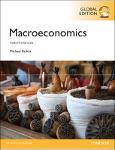
  • From our global food shortage to global warming, economic issues permeate our everyday lives. Parkin brings critical issues to the forefront. Each chapter begins with one of today's key issues, and additional issues appear throughout the chapter to show the real-world applications of the theory being discussed. When the chapter concludes, students "read between the lines" to think critically about a news article relating to the issue, demonstrating how thinking like an economist helps make informed decisions.

  • Sách/Book


  • Authors: Bade, Robin (2019)

  • To help students focus on the most important concepts-and effectively practice application of those concepts-Foundations of Macroeconomics is structured around a Checklist/Checkpoint system. The result is a patient, confidence-building program that prepares students to use economics in their everyday lives, regardless of what their future career will be.

  • Sách/Book


  • Authors: Kreinovich, Vladik (2021)

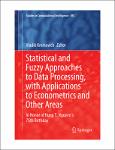
  • Mainly focusing on processing uncertainty, this book presents state-of-the-art techniques and demonstrates their use in applications to econometrics and other areas. Processing uncertainty is essential, considering that computers - which help us understand real-life processes and make better decisions based on that understanding - get their information from measurements or from expert estimates, neither of which is ever 100% accurate. Measurement uncertainty is usually described using probabilistic techniques, while uncertainty in expert estimates is often described using fuzzy techniques

  • Sách/Book


  • Authors: Michael Parkin (2021)

  • Each chapter opens with one of today's central issues and is then revisited in the chapter ending Economics in the News feature. Students will begin to think about issues the way real economists do and learn how to explore difficult policy problems to make more informed decisions in their own economic lives.

  • Sách/Book


  • Authors: Beckerman, Wilfred (2017)

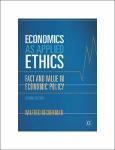
  • This important textbook has been revised and updated to continue its focus on the link between ethics and economic policy analysis, whilst ensuring that perspectives addressing the moral limits of the market, latest behavioural economics literature, and the changes in inequality over the years are included. Basic philosophical concepts are systematically described, followed by conventional welfare economic theory and policy, and applications to some topical economic problems such as income distribution and sustainable development.

  • Sách/Book


  • Authors: Polizzi , Salvatore (2022)

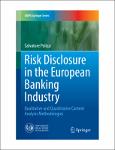
  • This book analyses the use of qualitative and quantitative content analysis methodologies for risk disclosure practices in the European banking industry. While doing so, it assesses the level of transparency of financial and non-financial reports by focusing on the information disclosed to the public with reference to risk exposure and management. By drawing upon both qualitative and quantitative techniques, the book proposes two different methodological approaches to assess the information European financial institutions provide to the public with reference to the risk disclosure and derivative disclosure in their annual financial reports.

  • Sách/Book


  • Authors: - (2022)

  • The book presents interviews and surveys with risk managers to gather insights on risk management and risk disclosure in practice. Additionally, the book collects and analyzes information contained in public reports to capture risk disclosure and perceptions on risk management impacts on companies internal organization. It sheds light on financial and market values to understand the effect of risk management on actual and perceived firms performance, respectively. Further, it examines the impacts of risk and risk management on society and the economy.