Search

Search Results

Results 1071-1080 of 1251 (Search time: 0.211 seconds).
Item hits:
  • Sách/Book


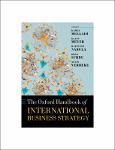
  • Authors: Mellahi, Kamel (2021)

  • It lays out how the classic principles of international competitive strategy are transformed in today's markets, in great part due to digitalization, and provides suggestions on how MNEs can develop international business strategies to respond to these transformations. The implications of these discussions for strategy and practice are becoming ever more profound. This Handbook will prove a valuable resource for both international business scholars and practitioners.

  • Sách/Book


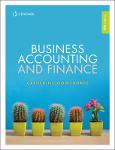
  • Authors: Gowthorpe, Catherine (2018)

  • Business Accounting and Finance, Fifth Edition, provides a clear, straightforward introduction to key management and financial accounting topics. In this new edition, a wealth of examples and real-life cases from well-known organizations, such as Lloyds, Tesco, Experian and Burberry, bring theory to life and prepare students for a successful career in the workplace.

  • Sách/Book


  • Authors: Farina, Michael (2017)

  • College Accounting, A Contemporary Approach, 4/e is a streamlined version of the text designed for instructors who teach the course without covering special journals. The authors represent the breadth of educational environments--a community college, a career school, and a four-year university--ensuring that the text is appropriate for all student populations.

  • Sách/Book


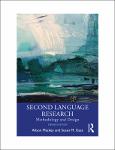
  • Authors: Mackey, Alison (2021)

  • Second Language Research: Methodology and Design is a clear, comprehensive overview of core issues in L2 research. Authored by the foremost scholars in SLA and supported by a wealth of examples from actual studies and extensive pedagogical resources, this book first introduces students to the key topics and debates in L2 research

  • Sách/Book


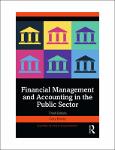
  • Authors: Bandy, Gary (2023)

  • The importance of public financial management for the health and wellbeing of citizens became dramatically apparent as governments sought to respond to the coronavirus pandemic in 2020. Now, governments and other public sector organizations face the challenge of recovering from the pandemic whilst also seeking to achieve. Sustainable Development Goals, with squeezed budgets and ever-increasing demands for public services. Public sector managers are confronted daily with targets and demands that are often set in confusing accounting and financial language. In Financial Management and Accounting in the Public Sector, Gary Bandy employs a clear and concise narrative to introduce the core concepts of public financial management to help those managers to deliver programmes, projects and ...

  • Sách/Book


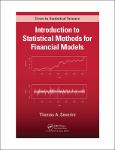
  • Authors: Severini, Thomas A (2018)

  • The audience for the book is students majoring in Statistics and Economics as well as in quantitative fields such as Mathematics and Engineering. Readers are assumed to have some background in statistical methods along with courses in multivariate calculus and linear algebra.

  • Sách/Book


  • Authors: Manos, Ronny (2023)

  • Taking a concise approach to the key concepts of finance, this textbook clearly focuses on the most relevant issues around financial management, which will be of interest to business managers, students and anyone who wishes to understand the basics of finance.

  • Sách/Book


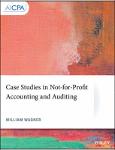
  • Authors: Wagner, William (2018)

  • Gain hands-on experience with case studies designed to simulate real-world scenarios and common problems in today's not-for-profit environment. This book goes beyond the theory and will show you how to navigate the key issues that arise in not-for-profit accounting and auditing.

  • Sách/Book


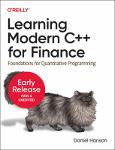
  • Authors: Hanson, Daniel (2023)

  • A lot of financial modeling has gravitated toward Python, R, and VBA, but many developers hit a wall with these languages when it comes to performance. This practical book demonstrates why C++ is still one of the dominant production-quality languages for financial applications and systems.

  • Sách/Book


  • Authors: Ross, Stephen A (2023)

  • "We designed Essentials of Corporate Finance to be as flexible and modular as possible. There are a total of nine parts, and, in broad terms, the instructor is free to decide the particular sequence. Further, within each part, the first chapter generally contains an overview and survey. Thus, when time is limited, subsequent chapters can be omitted. Finally, the sections placed early in each chapter are generally the most important, and later sections frequently can be omitted without loss of continuity. For these reasons, the instructor has great control over the topics covered, the sequence in which they are covered, and the depth of coverage